Already know which material you need?
Use these product examples to explore the different structures. A photo can help start the conversation, but does not establish the material specification or performance.
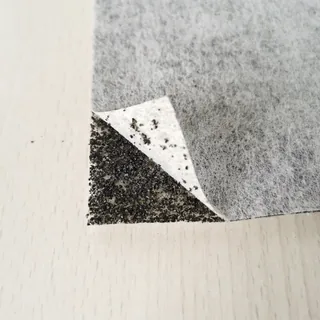 Sandwich nonwovenCarbon between supporting layers. View product →
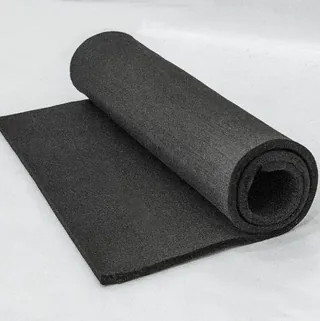 ACF feltA fibrous activated carbon material. View product →
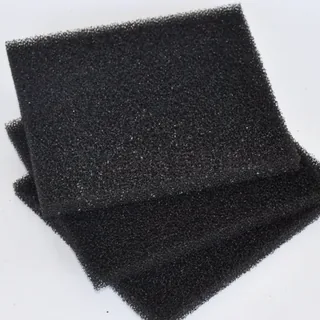 Carbon foamOpen-cell PU foam carrying carbon. View product →
Already have a material name? Use the existing product and inquiry routes below. If you are unsure, share your application or an available photo; we can clarify the construction with you.
If your specification says “fibrous activated carbon media,” confirm the base material. Polyester fibers carrying powdered activated carbon and activated carbon fibers (ACF) describe different constructions.
| Material named in the RFQ | Construction to confirm | Product details and quotation |
|---|---|---|
| Activated carbon nonwoven | Carbon-containing nonwoven; confirm the selected model. | Activated carbon nonwoven product Request a nonwoven quote |
| Carbon-impregnated polyester media | Polyester fibers carrying powdered activated carbon; separate from activated carbon fiber (ACF) felt. | Carbon-Impregnated Polyester Filter Media Request a polyester-carbon media quote |
| Sandwich carbon nonwoven cloth | Activated carbon between nonwoven support layers; not ACF cloth. | Request a sandwich-media quote |
| ACF felt | Activated carbon fiber felt; confirm the specified construction. | Request an ACF felt quote |
| Carbon foam sheet or pad | Open-cell polyurethane foam carrying activated carbon; not a rigid honeycomb block. | Request a carbon foam quote |
Still deciding? The comparison below explains the different material structures. When the construction is clear, use the quotation comparison checklist before comparing prices.
Buying “carbon cloth”? Confirm the construction first
A material name alone is not a specification. Check whether the adsorption layer is made from activated carbon fibers or uses activated carbon between nonwoven support layers. ACF cloth and sandwich nonwoven are different products. If your RFQ says “sandwich activated carbon cloth,” send the layer drawing or a sample photo before selecting a material.
Compare our sandwich nonwoven for the layered structure, or ACF cloth for activated-carbon-fiber cloth. For ACF cloth versus felt, see the cloth and felt comparison.
What is the difference between activated carbon nonwoven, ACF felt and carbon foam?
The main difference is the carrier structure. Activated carbon sandwich nonwoven holds activated carbon between supporting nonwoven layers; activated carbon fiber felt is a fibrous carbon adsorption medium; and activated carbon foam uses porous polyurethane foam carrying powdered activated carbon. These structures affect supply format, thickness options, conversion and installation.
This guide compares activated carbon sandwich nonwoven fabric, activated carbon fiber felt and activated carbon foam. The sandwich construction discussed here is not the same product as activated carbon nonwoven fabric, which is a separately listed carbon-containing nonwoven for filtration and converted odor-control layers.
There is no universal “best” activated carbon filter media. Selection depends on the target pollutant, airflow, available installation space, required component shape and downstream manufacturing process. For a broader overview, see the activated carbon filter media guide.
Activated carbon works by adsorption: gaseous pollutants are transferred from the air stream to the solid surface of the adsorbent. The U.S. Environmental Protection Agency notes that adsorption capacity is finite, so service life and replacement planning must be considered as part of the complete filter design.
Quick selection summary
| If the project needs... | Material to evaluate first | Why |
|---|---|---|
| A flexible carbon-containing layer for slitting, lamination or die cutting | Sandwich nonwoven | Activated carbon is held between supporting nonwoven layers; confirm its form for the selected model. |
| Flexible fibrous adsorption media for layering or cartridge conversion | ACF felt | The activated carbon is present as a fibrous felt medium. |
| A porous sheet or custom-shaped foam component | Activated carbon foam | Open-cell polyurethane foam carries powdered activated carbon. |
This is a starting point, not a performance guarantee. Final selection must be checked against the pollutant, airflow, dimensions, installation and complete filter design.
Purchasing check
How should buyers compare carbon-media quotations?
A carbon-media price is only comparable when the material, supplied dimensions and included work are clear. A roll price, a price per square meter and a price per finished pad describe different quantities. Compare the same construction and supply format before deciding which quotation meets your requirement.
- Material and unit: identify the proposed model and structure, the quoted unit, and the width and length of a roll or the dimensions of each sheet or pad. Do not compare ACF, carbon-containing nonwoven and sandwich nonwoven as one material.
- Layer and carbon definitions: record the agreed layer arrangement, thickness or basis weight, and any carbon-loading value with its unit and definition. Total media weight is not the same as the weight of activated carbon.
- Scope and quantity: separate the media from any requested slitting, cutting or lamination. List the trial and regular-order quantity, and ask which packaging, sample and freight costs are included or quoted separately.
- Approval basis: tie the quotation to the selected model, drawing or sample reference and any required test evidence. Confirm the proposed specification, minimum order quantity and lead time for the project; price alone does not establish removal performance or service life.
If the material is not yet identified, send a layer photo or drawing and state which details are unknown. Choose the matching carbon-media product page to send your requirement. For supply dimensions, packing and receiving details, use the roll, sheet and cut-part guide.
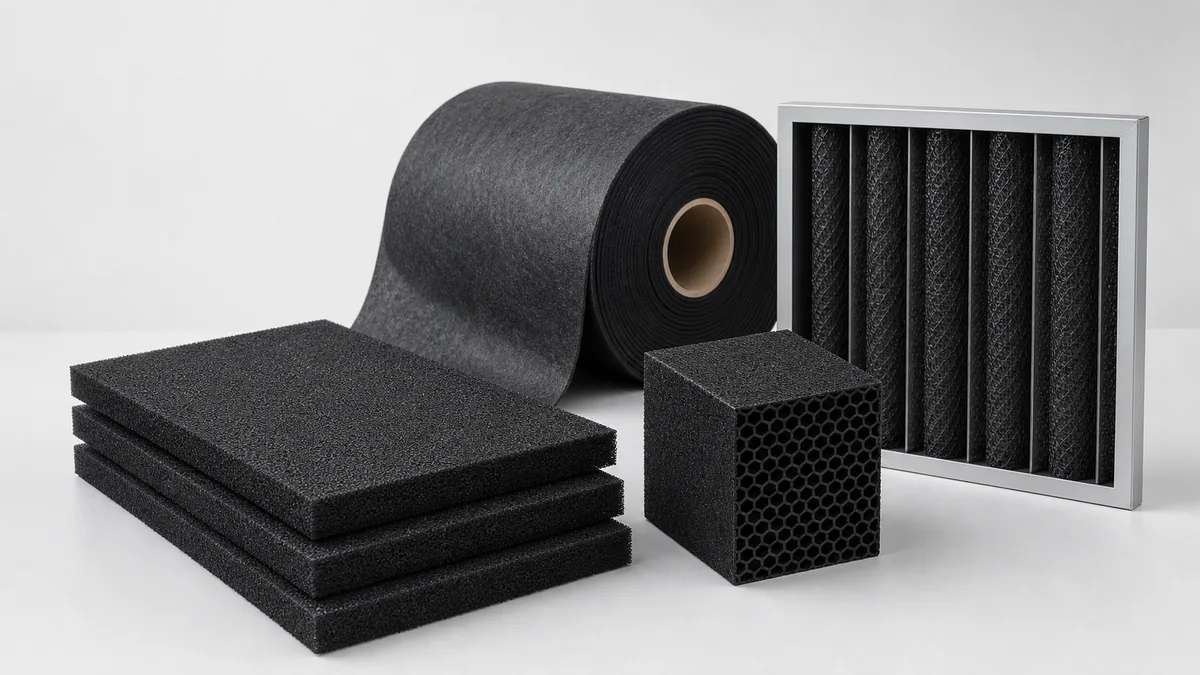
Material 01
Activated Carbon Sandwich Nonwoven Fabric
Activated carbon sandwich nonwoven fabric holds activated carbon between supporting nonwoven layers. This layered construction can be supplied for filter conversion; confirm the selected model and carbon form.
- Supply form: roll, sheet or cut pad
- Structure: activated carbon between nonwoven layers
- Applications: air purifier, HVAC, fresh-air and odor-control filters
- Conversion: slitting, lamination and die cutting
This format is suitable when a filter design needs a flexible, carbon-containing layer that can be processed together with supporting media. Buyers should specify roll width or sheet dimensions, basis weight, carbon loading, lamination structure and required cut size.
Material 02
Activated Carbon Fiber Felt
Activated carbon fiber felt is a flexible fibrous adsorption medium. It can be supplied in rolls or sheets, layered, cut or converted into cartridges and other filter components.
- Supply form: roll or sheet
- Material: viscose-based activated carbon fiber felt
- Applications: VOC adsorption, odor control and industrial filtration
- Conversion: layering, cutting and cartridge development
The confirmed thickness range is 0.8–4.5 mm. Final selection should also consider the target VOC or odor source, required width, airflow, installation structure, temperature, humidity and component conversion method.
Material 03
Activated Carbon Foam Filter Media
Activated carbon foam filter media uses open-cell polyurethane foam as the carrier for powdered activated carbon. The porous structure can be supplied as sheets or custom-cut components.
- Supply form: foam sheet or cut pad
- Structure: polyurethane foam with powdered activated carbon
- Applications: air purifier, ventilation, fume and odor-control filters
- Conversion: sheet cutting and custom component shaping
The catalog series covers 10–60 PPI. Existing catalog options include 20, 30 and 35 PPI; finished-sheet thickness is 3–100 mm. These are series references, not a promise that every pore-density and thickness combination is available. Confirm the selected model for your airflow, installation space and required cut dimensions.
Activated carbon filter media comparison
| Selection factor | Sandwich nonwoven | ACF felt | Activated carbon foam |
|---|---|---|---|
| Basic structure | Activated carbon between nonwoven layers | Fibrous activated carbon felt | Open-cell PU foam with powdered carbon |
| Common format | Roll, sheet or cut pad | Roll, sheet or converted component | Sheet or cut component |
| Confirmed catalog data | Final values confirmed by selected construction | 0.8–4.5 mm thickness | Catalog series: 10–60 PPI; finished sheets: 3–100 mm. Confirm the selected PPI and thickness combination. |
| Typical conversion | Slitting, lamination and die cutting | Layering, cutting and cartridge conversion | Cutting and component assembly |
| Typical use | HVAC, air purifier and fresh-air filters | VOC, industrial exhaust and adsorption components | Air purifier, ventilation and compact modules |
| Buyer information needed | Width, basis weight, layer structure and cut size | Thickness, width, layer or cartridge structure | PPI, thickness, dimensions and component shape |
How to compare activated carbon media specifications
First identify the construction, then compare like-for-like measurements. A heavier sheet, a thicker pad or a larger carbon percentage does not, by itself, establish which material meets your filter requirement.
| Quoted value | What to clarify | What it does not establish on its own |
|---|---|---|
| Basis weight, g/m² | Is this the mass per area of the complete medium or of one layer? | The mass of activated carbon alone |
| Carbon content, % | What mass is used as the denominator, and what test or calculation defines the value? | Gas-removal efficiency or service life |
| Thickness, mm | Which construction and measurement conditions does it describe? | Interchangeability between nonwoven, felt and foam |
| Pressure drop, Pa | What airflow or face velocity, specimen thickness and test arrangement were used? | A comparable result when the test conditions differ |
| Adsorption result | Which gas, concentration, method and endpoint were used? Was the test on media or a complete filter? | Performance against every odor or in a different finished product |
EDANA defines basis weight as mass per unit area. See the sandwich nonwoven product page for the distinction between total basis weight and carbon content.
The published scope of ISO 10121-1 concerns laboratory challenge testing of gas-phase air-cleaning media for general ventilation. Mentioning this method here does not mean that a Junkang product has been tested or certified to it; ask for a report covering the actual material under consideration.
For the units, the percentage denominator and a worked calculation, see basis weight versus carbon loading below.
Reading the numbers
Basis weight vs. carbon loading: what are you comparing?
Basis weight describes the mass of material per unit area. Carbon loading needs its own definition. For carbon carried by nonwoven or foam, total g/m² includes the carrier and any other included layers; it is not a carbon-only figure. A carbon percentage is not a gas-removal efficiency. Identify the material, included layers and measurement basis before comparing quotations.
For ACF felt, identify the actual specimen composition rather than assuming a separate non-carbon carrier.
| Quoted figure | What it describes | What to clarify |
|---|---|---|
| Basis weight, g/m² or GSM | Grams of the stated material per square meter | Does it cover the complete medium, only the carrier, or one layer? Which sample-conditioning and measurement method was used? |
| Carbon content, % | A carbon proportion whose numerator and denominator must be defined | Is it activated carbon as a mass fraction of the finished medium, or carbon added relative to the carrier? Which binders and supporting layers are included in the denominator? |
| Carbon loading, g of carbon/m² | Mass of activated carbon per unit area of the stated medium | How was the carbon mass determined? Does the area refer to the same material and construction as the total basis-weight figure? |
ISO 9073-1:2023 covers determination of the mass per unit area of nonwoven fabrics. It is a mass measurement, not a particle-filtration or gas-removal rating. Check the selected model's test report to establish which method was used.
When can you calculate carbon mass per square meter?
Only when the total basis weight and the activated-carbon mass fraction describe the same finished medium on a consistent measurement basis. A mass fraction is the constituent mass divided by the total material mass, as explained in NIST's materials-data guide, section 6.3.1.1. A percentage based on carrier mass is a different ratio.
Illustrative calculation only—not a Junkang specification or test result.
Assume a finished medium has a total basis weight of 240 g/m² and activated carbon accounts for 25% of its total mass. Both figures refer to the same material and conditioning basis.
Carbon mass per area = total basis weight × carbon mass fraction
240 g/m² × 0.25 = 60 g of carbon/m²
If the quoted 25% instead means carbon added relative to the uncoated carrier, this calculation does not apply. Ask for the denominator before converting the value.
Does more carbon per square meter prove a better filter?
No. This calculation is mass accounting, not a test of adsorption capacity, removal efficiency or service life. Review evidence for the target gas, the tested construction and the operating conditions. The U.S. EPA's carbon-adsorber guidance identifies outlet VOC concentration and operating conditions among the performance indicators; a carbon-mass figure alone does not provide those results.
Use the test-report scope checklist to distinguish media and complete-device evidence, and the face-velocity and pressure-drop guide to keep airflow conditions with resistance data.
The same basis-weight check applies to white pre-filter media
For a white pre-filter, establish whether g/m² describes the individual layer or a finished composite. The mass figure alone does not assign a filtration class. State the required standard and check model-matched performance documentation separately.
Keep each quotation tied to the selected product and layer arrangement. Use the existing product forms to send the quoted values, their definitions and your application:
How to check an activated carbon filter test report
Start with the report's test item and purpose. A particle-removal rating, a gas test on a media sample and a gas test on a complete filter answer different questions. Confirm the proposed material or device model before using any result to approve your design.
Does a MERV rating prove odor or VOC removal?
No. MERV describes particle capture, as explained by the U.S. EPA's MERV guide. It does not establish gas-removal performance. For a filter combining a particle layer and activated carbon, review particle and gas performance separately; one result cannot substitute for the other.
Was the test on media or on a complete filter?
| Report or method | What it evaluates | What the buyer should check |
|---|---|---|
| MERV / ASHRAE 52.2 | Particle-removal performance of an air-cleaning device | The tested model and airflow; this is not evidence of gas adsorption. |
| ISO 10121-1:2014 | Gas-phase media under laboratory challenge conditions | The tested media configuration, gas and conditions; a media test does not establish complete-device performance. |
| ISO 10121-2:2013 | A complete gas-phase air-cleaning device | The actual device construction and the gas-removal and airflow data in its report. |
| ASHRAE 145.2-2025 | An in-duct gas-phase air-cleaning device | The device model and stated test conditions; this method does not cover stand-alone room air cleaners. |
ISO 10121-1 uses elevated gas concentrations and cautions against directly comparing different media configurations or predicting real-use performance from the laboratory result. Read the report's scope and limitations before ranking nonwoven, felt and foam by a single adsorption figure.
Can a test on loose granular carbon validate a carbon sheet?
It does not establish the performance of the sheet. ASHRAE 145.1-2024 is for loose granular sorbents; its scope excludes carbon cloths and sorbent-loaded nonwovens. Request evidence appropriate to the supplied sheet or complete device rather than treating a test on loose carbon as a test on the converted product.
For a useful comparison, record the material or device model, tested construction and dimensions, challenge gas and concentration, airflow or face velocity, temperature and humidity, and the reported endpoint. The test method should fit the actual product and intended question. The standards above explain test scope; they are not test reports or certifications for Junkang products.
Start with the sandwich nonwoven product review for a carbon layer, or the white pre-filter and carbon-stage guidance for a combined design. For replacement planning, see the carbon filter service-life guide.
What should a sample evaluation establish?
Use a sample to answer a defined question, not simply to confirm that the material looks similar. Keep the sample reference and the specification together so that a later quotation refers to the same construction.
- Physical fit: check dimensions, layer arrangement and how the sample sits in your component.
- Processing fit: try the cutting or assembly steps required by your design before approving the production format.
- Performance requirement: agree on the target contaminant, operating conditions, test method and acceptance criterion. For a replacement, compare with the existing material under the same conditions.
For adsorption systems, the U.S. EPA identifies gas concentration, flow, temperature and moisture among the relevant operating indicators. Its guidance is not a performance specification for these flexible materials. Use the service-life guide when planning a replacement interval.
Need to compare other structures? The full media overview also links to ordinary carbon nonwoven, PET-based media and ACF cloth. This article compares only sandwich nonwoven, ACF felt and carbon foam.
When should activated carbon media be paired with white pre-filter media?
Activated carbon media and white synthetic pre-filter media serve different functions. Carbon media is selected mainly for gas-phase adsorption and odor control, while white pre-filter media is selected for particulate pre-filtration.
Depending on the equipment design and incoming air, a white synthetic pre-filter may be installed before the carbon stage to handle dust and larger particles. This can help keep the carbon stage focused on its intended adsorption function. The exact arrangement must be checked against the required filtration grade, airflow, available installation space and replacement plan.
When requesting both materials, provide the equipment type, filter dimensions, airflow direction, target dust or odor source and whether rolls, sheets, cut pads or assembled filters are required. Final specifications for each layer are confirmed separately.
Frequently asked questions
What is activated carbon filter media?
Activated carbon filter media is an adsorption material used as a functional layer or component in odor-control and gas-phase filtration systems. Available structures include carbon-containing nonwoven, activated carbon fiber felt and activated carbon carried by porous foam.
What is the difference between activated carbon sandwich nonwoven and activated carbon fiber felt?
Activated carbon sandwich nonwoven holds activated carbon between supporting nonwoven layers. Activated carbon fiber felt is itself a fibrous activated carbon adsorption medium. The different structures affect supply format, conversion method and the type of filter component in which each material is used.
Is activated carbon felt better than activated carbon foam?
Neither structure is universally better. ACF felt is selected as flexible fibrous adsorption media for rolls, layers and converted components, while carbon foam is selected when a porous sheet or shaped foam component is required. Final selection depends on the application and filter design.
Is activated carbon foam the same as a rigid honeycomb activated carbon block?
No. The carbon foam in this guide uses open-cell polyurethane foam as the carrier for powdered activated carbon. A rigid honeycomb activated carbon block has a different structure and must be evaluated as a separate product type.
Can activated carbon filter media remove dust?
Activated carbon media is mainly selected for gas-phase adsorption and odor control. When the incoming air also contains dust or particles, the complete filter design may need a separate particulate pre-filter before the carbon stage.
Does activated carbon filter media replace a white pre-filter?
Not normally. Activated carbon media and white synthetic pre-filter media perform different functions. Depending on the equipment design and incoming air, the two stages may be used together, with the particulate pre-filter installed before the carbon stage.
What information is needed to select activated carbon filter media?
Provide the filter application, target odor or VOC, required roll, sheet or component format, dimensions, installation space, airflow conditions and any lamination, cutting, frame or sealing requirement. A drawing or reference sample is also useful when available.
Information to send before requesting a sample
- Filter application or equipment type
- Target odor, VOC or gas-phase contaminant
- Required roll, sheet or finished-component format
- Length, width, thickness and available installation space
- Operating airflow, temperature and humidity
- Required lamination, cutting, frame or sealing structure
- Product drawing or reference sample, when available
If some specifications are not yet confirmed, describe the current application and equipment structure. Junkang Filter Media can introduce the available factory product formats for evaluation.
When replacement interval is part of the project, use the separate activated carbon filter service-life buyer guide to prepare contaminant concentration, operating hours and the required breakthrough or monitoring endpoint.
Technical reference
General adsorption principles referenced in this guide are consistent with the U.S. Environmental Protection Agency’s overview of activated carbon adsorbers.
U.S. EPA: Activated Carbon Adsorber Monitoring and Control Technique