What is the difference between activated carbon fiber cloth and felt?
Activated carbon fiber cloth and activated carbon fiber felt are two different flexible ACF media forms. ACF cloth is supplied as thin roll, sheet or cut-part material. The ACF felt in the supplied factory catalog is a viscose-based fibrous felt supplied in rolls or sheets. Their formats, listed specifications and conversion discussions are not interchangeable.
Both materials may be evaluated for adsorption-related components, but the correct choice depends on the actual product model, target pollutant, layer structure, dimensions, airflow, operating environment and validation method. Neither product name alone proves suitability for a finished filter or end-use claim.
What does “carbon cloth” mean in an RFQ?
The name alone does not identify the material. In this product range, activated carbon fiber cloth (ACF cloth) is a separate product from activated carbon nonwoven fabric and activated carbon sandwich nonwoven fabric. The sandwich product has activated carbon between supporting nonwoven layers; its carbon form must be checked for the selected model. The separately listed PET-based activated carbon filter media uses polyester fibers carrying powdered activated carbon and is not ACF felt.
If an existing specification says only “carbon cloth” or “carbon felt,” send the current material name, a photo of the layer or cut edge, dimensions and any model or test document. Confirm the material construction before comparing catalog figures or ordering a replacement.
Matching an existing ACF specification
An RFQ should identify activated carbon fiber (ACF), the cloth or felt form, and any existing grade or model reference. “Carbon cloth” and “carbon felt” alone are not enough to match a replacement.
If your specification calls for a particular treatment, send its name and the existing datasheet or test requirement. Matching the material form, thickness or basis weight does not confirm that treatment. The requested grade must be checked before quotation. For felt, see the ACF felt specification check.
Quick selection summary
| If the project needs... | Material to evaluate first | Information to confirm |
|---|---|---|
| A thin flexible ACF layer supplied as roll, sheet or custom-cut part | ACF cloth | Basis weight, width, cut dimensions, layer structure and intended application |
| A viscose-based fibrous felt with a catalog thickness range | ACF felt | Thickness, density, width, component structure and target VOC or odor source |
| A converted multilayer or cartridge component | Evaluate the finished structure | Drawing, sample, airflow, installation space, conversion and test requirements |
This table is a starting point for sample discussion. Final selection must be based on the exact model and finished-product design.
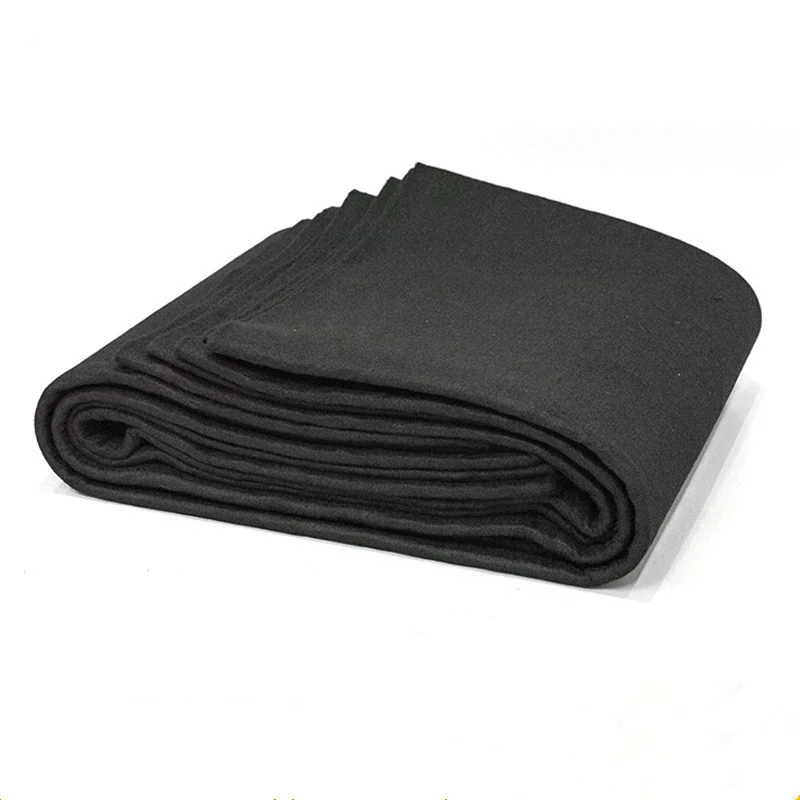
Material 01
Activated Carbon Fiber Cloth
Activated carbon fiber cloth, also called ACF cloth, is a thin flexible activated carbon fiber adsorption medium. It can be discussed as roll, sheet or converted cut-part material for air-purification, protective-product and adsorption-component projects.
- Supply form: roll, sheet or cut part
- Material: activated carbon fiber cloth
- Catalog specific surface area: 900–1200 m²/g
- Catalog basis weight: 80–350 g/m²
- Customization discussion: basis weight, width, dimensions and converted shape
The two catalog ranges describe the product series. They do not mean that every basis-weight and specific-surface-area combination is available in one model, and they do not independently confirm removal performance in a finished product.
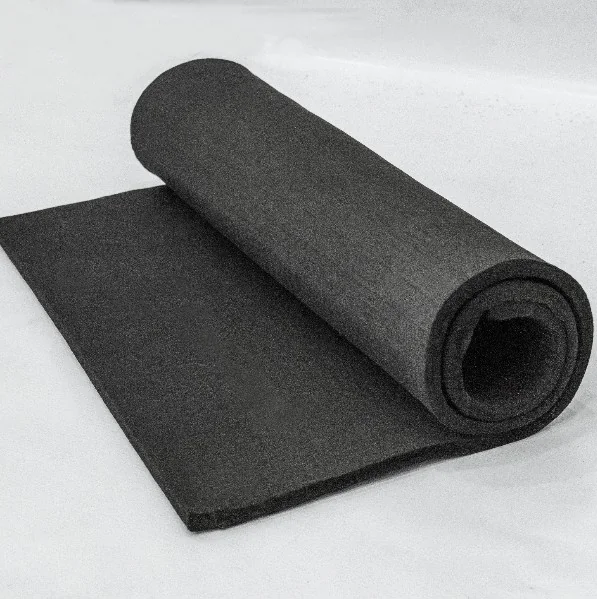
Material 02
Activated Carbon Fiber Felt
Activated carbon fiber felt, or ACF felt, is a flexible fibrous adsorption medium. The supplied catalog identifies it as black, viscose-based needle-punched activated carbon fiber felt for VOC adsorption, odor control and converted industrial filtration components.
- Supply form: roll or sheet
- Material: viscose-based activated carbon fiber felt
- Appearance: black needle-punched felt
- Catalog fiber diameter: 10–20 μm
- Catalog thickness: 0.8–4.5 mm
- Catalog bulk density: 0.05–0.08 g/cm³
- Catalog ash content: <2%
These values are product-series references. The selected felt model, dimensions, conversion structure and order specification must be confirmed before quotation or performance discussion.
ACF cloth vs. ACF felt comparison
| Selection factor | ACF cloth | ACF felt |
|---|---|---|
| Basic material form | Thin, flexible activated carbon fiber cloth | Black, viscose-based needle-punched activated carbon fiber felt |
| Supply format | Roll, sheet or cut part | Roll or sheet |
| Catalog values provided | Specific surface area and basis weight | Fiber diameter, thickness, bulk density and ash content |
| Catalog range highlights | 900–1200 m²/g; 80–350 g/m² | 10–20 μm; 0.8–4.5 mm; 0.05–0.08 g/cm³; <2% ash |
| Listed application direction | Air purification, protective products and adsorption components | VOC adsorption, odor control and industrial filtration |
| Conversion discussion | Width, cut dimensions, layer structure and converted shape | Thickness, density, width, layering and component conversion |
The catalog lists different properties for the two materials. The absence of the same test item on both product pages prevents a complete numerical performance ranking. Compare actual samples under the intended finished-product structure and applicable test method.
Can ACF cloth replace ACF felt directly?
Do not treat ACF cloth and ACF felt as direct substitutes based on the product name alone. They are different ACF media forms, and their catalog pages report different physical properties. Before considering a substitution, confirm the required format, dimensions, thickness or basis weight, layer position, target pollutant, airflow, conversion method and validation requirement.
When the existing filter uses one of these materials, provide its drawing, sample or current specification. The finished structure should be evaluated before changing the ACF form.
How should a buyer choose between ACF cloth and felt?
You can contact us before you have a complete specification. Start with your application, an existing material reference or a sample photo. The points below guide the follow-up selection discussion; share the details you already have, and we can clarify the rest together.
- Define the application. Identify the equipment, finished product and location of the ACF layer.
- Name the target pollutant. State the odor, VOC or other gas-phase contaminant to be evaluated.
- Choose the required material format. Specify roll, sheet, cut part, layered component or cartridge structure.
- Provide physical requirements. Include width, length, thickness or basis weight, cut shape and available installation space.
- Describe operating conditions. Share airflow, temperature, humidity and any other known environmental conditions.
- State the validation requirement. Identify the test method, finished-product claim or customer standard that must be reviewed.
If you are replacing an existing component, a drawing or physical sample can help us review the construction after the initial discussion.
Frequently asked questions
Is activated carbon fiber cloth the same as activated carbon fiber felt?
No. Both belong to the activated carbon fiber media family, but they are different material forms. ACF cloth is supplied as thin roll, sheet or cut-part media; the catalog-listed ACF felt is a viscose-based fibrous felt supplied in rolls or sheets.
Which is thinner, ACF cloth or ACF felt?
The cloth series is described as thin and flexible, while the felt catalog lists a thickness range of 0.8–4.5 mm. The cloth catalog page does not provide a thickness range, so the exact models must be compared before making a numerical thickness claim.
Can the catalog values be compared directly?
Not as a complete performance ranking. ACF cloth is listed by specific surface area and basis weight. ACF felt is listed by fiber diameter, thickness, bulk density and ash content. Different listed properties do not prove that one material performs better in a finished filter.
Can ACF cloth replace ACF felt directly?
Not without checking the finished filter design. Confirm the required material format, dimensions, thickness or basis weight, layer position, target pollutant, airflow, conversion method and validation requirement before considering a substitution.
Which material is suitable for VOC control?
The ACF felt catalog lists VOC adsorption and odor-control applications. ACF cloth is listed for air purification and adsorption components. Suitability for a specific VOC, airflow or service-life target must be verified using the selected model, finished structure and applicable test method.
What information is needed before requesting samples?
Start with your application, an existing material reference or a sample photo. Share the details you already have; we can clarify dimensions, operating conditions and any test requirements together before agreeing the sample.
Data source and limitations
All numerical values on this page come from the factory product catalog supplied for the corresponding ACF cloth and ACF felt series. Values are presented as catalog references, not universal specifications or finished-product performance guarantees. Final specifications are confirmed by selected model and order document.
For general background on gas filtration, the U.S. EPA's Guide to Air Cleaners in the Home explains that particle CADR does not rate gas removal. This residential-air-cleaner guidance does not rank ACF cloth against felt or certify either Junkang product. Selection still requires evidence for the proposed model and finished design.