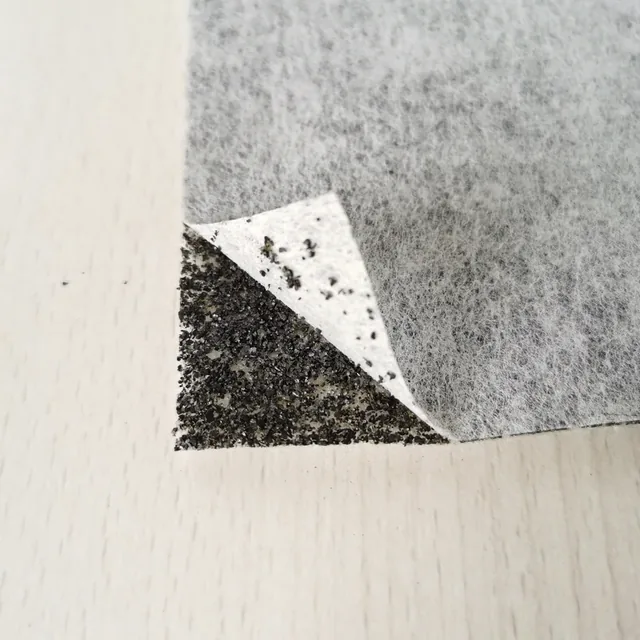
Activated Carbon Sandwich Nonwoven Fabric

Also called sandwich carbon nonwoven cloth, this medium holds activated carbon between supporting nonwoven layers. It is not activated carbon fiber (ACF) cloth. It can be considered for air-purifier and fresh-air filter designs; specify the required carbon form and layer construction if these are part of your existing design.

Form
Roll / Sheet / Cut pad
Material
Activated carbon between nonwoven layers
Application
Air purifier, HVAC, fresh air and odor-control filters
Customization
Width, basis weight, lamination and cut size

Not sure which construction you need? Start with your application or any photo or specification you already have. We can clarify the material and dimensions with you before confirming a quotation.

Procurement Specifications

Series reference

Use these three-layer composite series ranges to screen a requirement. Final combinations are confirmed for the selected model.

Basis weight
100–650 g/m²
Thickness
0.5–1.5 mm
Width
1.0–1.5 m
Roll length
100 m or 150 m
Activated carbon content
10–80%

For carbon loading, adsorption or pressure-drop requirements, request data for the specific model and test conditions rather than comparing catalog series values alone.

Details we can clarify together

These details help us review the material and converting requirements during follow-up. Share them where available.

  • Required roll width or sheet size
  • Target filter structure and installation space
  • Required carbon form or loading, if specified in your design, and a reference sample
  • Need for lamination, slitting or die cutting

How to request sandwich-media pricing

During quotation review, we agree the supply format: roll width and length or total area, or sheet or pad dimensions and number of pieces.

Include thickness or basis weight, carbon form or loading, and converting requirements where these are already specified. Mark unknown details “to confirm”. Before comparing quotations, check whether the price is per roll, square metre or piece, and which cutting, lamination, packing or freight costs are included or quoted separately.

Discuss your sandwich-media requirement

Request a Quotation

Tell us the application, supply format, dimensions and quantity. Share any specifications you already have; you do not need to complete a separate checklist. The product name is included automatically.

Have a drawing or sample photo? Send it to sales@junkangfilter.com or use WhatsApp. This form does not upload files.

What happens after your inquiry?
  1. Send the requirement you already have.
  2. Review the material, dimensions and specification with us.
  3. Agree sample or prototype arrangements.
  4. Approve the sample against the agreed requirements.
  5. Confirm the bulk quotation and supply arrangements.

Sample charges, minimum order quantity and lead time are confirmed for your project.

Material construction & comparisons

What is activated carbon sandwich nonwoven?

Activated carbon sandwich nonwoven is a layered medium with activated carbon between nonwoven layers. The term does not specify the carbon form or size. Rolls, sheets or converted pads can be discussed against the selected model and required dimensions.

It is used as a gas-phase adsorption and odor-control layer in air purifier, HVAC, fresh-air and other filter components. Final selection depends on the required construction, available installation space, airflow and target odor or VOC.

Sandwich carbon cloth or ACF cloth?

“Sandwich Carbon Non-woven Cloth” is the catalog name for this layered medium: activated carbon is held between supporting nonwoven layers. It is not activated carbon fiber cloth (ACF cloth), which is a separate activated carbon fiber material.

If your RFQ says only “carbon cloth,” confirm the construction before comparing prices or samples. Send a layer description, existing datasheet or sample photo, together with dimensions and quantity. The word “sandwich” does not identify the carbon form or particle size.

Use the carbon-cloth name check to distinguish ACF cloth from carbon-containing nonwoven materials.

Frequently asked questions & test-report guidance

Frequently asked questions

Can sandwich nonwoven be supplied as rolls or cut pads?

Roll, sheet and cut-pad formats can be discussed. Required width, basis weight, lamination structure, cut size and quantity should be provided for confirmation.

Is this material used for particle filtration?

Its main role is gas-phase adsorption and odor control. If the incoming air contains dust or particles, a suitable particulate pre-filter should be considered as part of the complete filter structure.

Is basis weight the same as carbon content?

No. Basis weight is mass per unit area, commonly expressed in g/m²; carbon content is a different quantity. Confirm whether a quoted basis weight describes the complete composite or one layer before comparing it with a carbon mass per unit area.

Ask for the carbon mass per unit area and the denominator used for any carbon-content percentage. Do not infer carbon loading, removal performance or service life from total basis weight alone.

Terminology reference: EDANA nonwovens glossary (basis weight / mass per unit area).

Reviewing a gas-removal test report?

Check whether the report covers this layered medium, loose carbon or a complete filter. A test result for loose carbon does not establish the performance of a supplied nonwoven sheet. Identify the proposed model, layer construction, test gas and operating conditions before comparing figures.

The carbon filter test-report guide explains the different scopes of media and device tests, including the exclusions in ASHRAE 145.1.

Does a particle filter rating prove odor removal?

No. A MERV rating describes particle capture, not gas adsorption. For a combined filter, review particle-removal and gas-removal evidence separately. The carbon layer must be evaluated against the target gas and the conditions of the intended design.

If your design also needs a dust stage, review white synthetic pre-filter media and combined-filter test requirements.