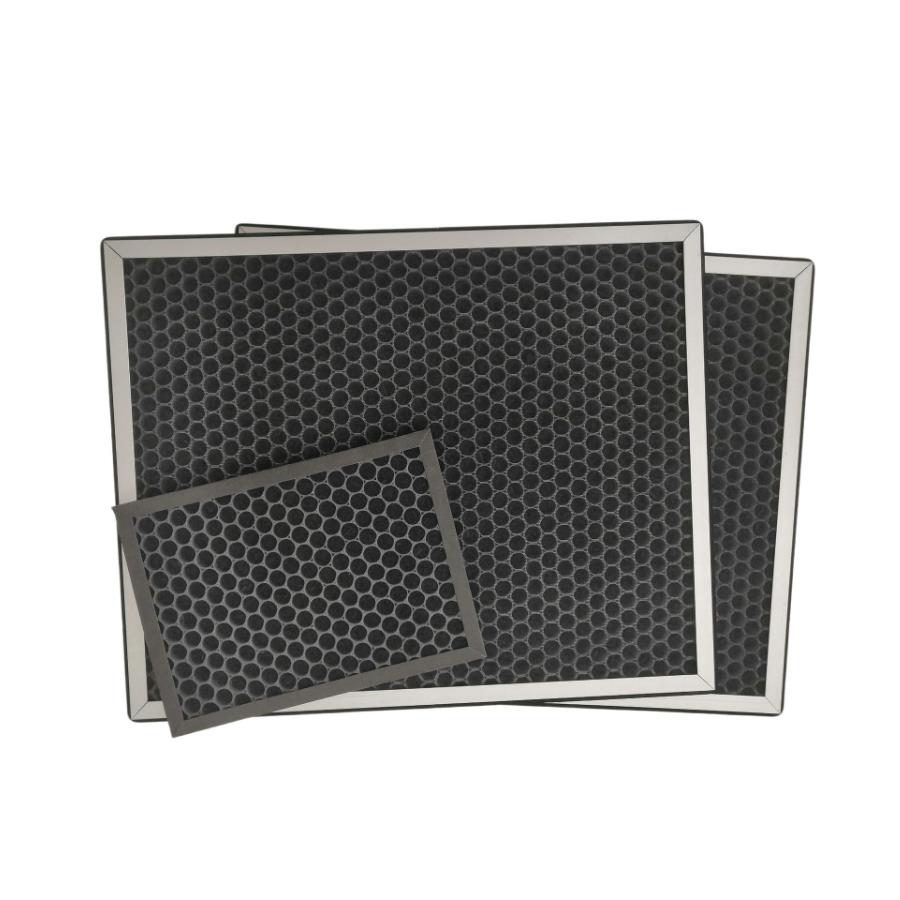
Plastic Honeycomb Activated Carbon Filter Module

This is a rigid filter component in which a plastic honeycomb support holds activated carbon. It can be developed for air purifier, odor-control and custom replacement-filter assemblies according to the equipment design.

Form
Plastic honeycomb filter module
Construction
Plastic honeycomb support holding activated carbon
Application
Air purifier and odor-control filter assemblies
Customization
Dimensions, thickness, carbon type, frame shape and sealing

Detailed technical parameters will be confirmed by product model, application and supplied specification sheet.

Why can “honeycomb carbon filter” mean different products?

The phrase describes more than one construction, so a buyer should confirm the carrier and physical form before comparing quotations:

  • Plastic honeycomb activated carbon filter module: a rigid plastic honeycomb support holds activated carbon behind retaining layers. This is the product shown on this page.
  • Activated carbon foam: a flexible, open-cell polyurethane foam carrier loaded with powdered activated carbon, supplied as sheets or cut pads. See activated carbon foam filter media.
  • Molded honeycomb carbon block: the rigid carbon body itself contains the flow passages. It is a separate product structure and should be specified separately.

How should a buyer identify the correct construction?

If the filter has visible plastic cells holding carbon behind mesh or another retaining layer, describe it as a plastic honeycomb activated carbon filter module. If it is a flexible sponge-like sheet, ask for activated carbon foam. If the honeycomb walls are formed from a rigid carbon body, identify it as a molded honeycomb carbon block.

A photo, drawing or existing sample is the safest way to prevent a material mismatch. Final construction and suitability are confirmed from the buyer's equipment and application.

Information needed for product selection

Activated carbon selection depends on the contaminant and operating conditions. Share the information already available; a drawing or sample photo is especially useful for replacement-filter projects.

  • Module length, width and thickness
  • Installation space, edge sealing and airflow direction
  • Target odor, gas or application
  • Existing airflow or pressure-drop requirement, if specified by the equipment
  • Required test method or acceptance criterion, if performance must be verified
  • Equipment drawing, reference sample and expected quantity

Application and OEM review

Typical discussions include odor-control modules for air purifiers and custom replacement-filter components. Dimensions, carbon type, frame shape, retaining layers and sealing are reviewed against the equipment design or supplied sample.

For a ventilation-system project, use the HVAC activated carbon filter selection guide to prepare the application details. No universal removal efficiency or service-life value is assumed without the target contaminant, operating conditions and agreed test method.

Which installation details belong on a replacement-module drawing?

Length, width and thickness describe the outer envelope, but not every feature needed to fit the equipment. Show the mating surfaces and any features on the existing part that control its position or seal.

  • Frame and location: mark any flange, locating tab, slot or fixing point that the replacement must match.
  • Seal: show the gasket position and mating surface, and say whether the drawing dimensions include the gasket.
  • Orientation: mark the airflow direction and installation face where specified by the equipment manufacturer.
  • Retaining layers: show the mesh or other layer on each face and how it is attached on the existing part.

These are details to review, not a list of standard features supplied with every module. Include the part number and drawing revision; factory feasibility must be confirmed before a replacement is offered.

Keep fit, carbon retention and adsorption checks separate

For sample approval, identify three separate requirements: fitting and sealing in the holder, keeping carbon contained during the specified handling and use, and meeting the required gas-phase performance. Passing one check does not establish the other two.

If your equipment specification limits loose carbon or requires a transport or vibration test, send the method and acceptance limit. Do not assume a particular mesh, attachment method or test result from a product photo.

For delivery identification and receiving records, use the packing and receiving checklist. For adsorption performance, use the service-life evidence checklist. No carbon-release, vibration or service-life rating is claimed for an unspecified module.

Buyer questions

Plastic Honeycomb Carbon Filter FAQ

Answers based on the confirmed product structure and current customization scope.

Is this the same as activated carbon foam?

No. This product is a rigid plastic honeycomb module. Activated carbon foam uses a flexible, open-cell polyurethane foam carrier and is normally supplied as sheets or cut pads.

Is this a molded honeycomb activated carbon block?

No. This module holds activated carbon in a plastic honeycomb support. A molded honeycomb carbon block is a separate rigid carbon structure and should be evaluated separately.

Can it be made for an existing purifier?

A replacement module can be reviewed from the existing part number, drawing, dimensions or sample. A match is confirmed only after the structure and factory feasibility have been checked.

Can removal efficiency be quoted without application data?

No single universal value should be assumed. The target odor or gas, operating conditions, carbon type, module dimensions and test method must be identified before performance requirements can be reviewed.

Send Your Requirement

Leave one valid contact detail so we can reply. The current product is filled in below and can be edited. Other information is optional.

Have a drawing or sample photo? Send it to sales@junkangfilter.com or use WhatsApp. This form does not upload files.

What happens after your inquiry?
  1. Send the requirement you already have.
  2. Review the material, dimensions and specification with us.
  3. Agree sample or prototype arrangements.
  4. Approve the sample against the agreed requirements.
  5. Confirm the bulk quotation and supply arrangements.

Sample charges, minimum order quantity and lead time are confirmed for your project.